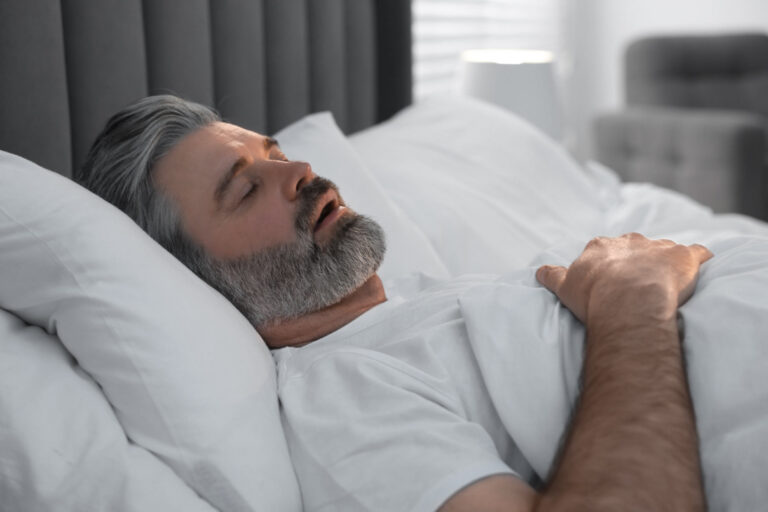
Sleep apnoea, chronic snoring and intermittent mouth breathing affect thousands of Australians every night, often leading to poor sleep quality, fatigue and long-term health issues. This comprehensive guide explains the connection between obstructive sleep apnoea, …

Waking up exhausted after what seemed like a full night’s sleep is frustrating enough. Add jaw pain, headaches, teeth grinding or clicking around the jaw joint, and getting a genuinely restorative night’s sleep can become even more difficult.
For some Australians, symptoms associated with obstructive sleep apnoea (OSA) and temporomandibular disorders (TMD) may occur at the same time. While they are separate conditions and one does not automatically mean you have the other, both can affect sleep, comfort and overall quality of life.
Understanding what is happening — and receiving the right professional assessment — is therefore an important first step.
At iHeart Sleep, the focus is on helping people understand their sleep-disordered breathing and explore appropriate treatment options, particularly those who have been diagnosed with obstructive sleep apnoea and are looking for an alternative to CPAP.
What Is Obstructive Sleep Apnoea?
Obstructive sleep apnoea is a sleep-related breathing disorder in which the upper airway repeatedly becomes partially or completely obstructed while you sleep.
These interruptions can cause the body to repeatedly move out of deeper stages of sleep as it attempts to restore normal breathing.
The person experiencing sleep apnoea may not even realise it is happening.
Instead, a partner may notice loud snoring, pauses in breathing, gasping or choking during the night.
Other common warning signs can include:
- Loud or persistent snoring
- Gasping or choking during sleep
- Waking frequently during the night
- Morning headaches
- Dry mouth on waking
- Excessive daytime tiredness
- Difficulty concentrating
- Brain fog
- Irritability or changes in mood
- Feeling unrefreshed despite spending enough time in bed
Snoring alone does not necessarily mean you have obstructive sleep apnoea, but persistent snoring combined with other symptoms should not simply be ignored.
A proper medical assessment is important because sleep apnoea needs to be diagnosed by an appropriately qualified medical practitioner.
What Is TMJ or TMD?
People commonly say that they “have TMJ”, but TMJ actually stands for the temporomandibular joint — the joint connecting your lower jaw to your skull.
The medical term for conditions affecting the jaw joint and surrounding muscles is temporomandibular disorder, or TMD.
Symptoms can vary significantly from person to person.
Common TMD or TMJ-related symptoms may include:
- Pain or tenderness around the jaw
- Jaw clicking or popping
- Difficulty or discomfort when opening the mouth
- Jaw stiffness
- Facial pain
- Pain around the ears
- Morning jaw soreness
- Headaches
- Teeth grinding or clenching
- Changes in the way the teeth come together
Because jaw discomfort, headaches and poor-quality sleep can have many possible causes, experiencing these symptoms does not necessarily mean that you have TMD, sleep apnoea or both.
Professional assessment is important.
Is There a Connection Between Sleep Apnoea and Jaw Problems?
This is where things become particularly interesting from a sleep-health perspective.
The position of the jaw and tongue can influence the space available in the upper airway during sleep.
When the muscles of the body relax during sleep, the tongue and surrounding soft tissues may move backwards and contribute to narrowing or obstruction of the airway in susceptible individuals.
This is one reason why mandibular advancement devices (MADs) and other professionally prescribed oral appliances can be used to treat certain cases of obstructive sleep apnoea.
These devices generally work by positioning the lower jaw forward during sleep, helping maintain a more open upper airway.
However, the jaw is also a complex joint.
If someone already experiences jaw pain, clenching, grinding, clicking or another TMD-related symptom, this needs to be considered when assessing whether oral appliance therapy is suitable.
It is not simply a matter of purchasing a generic mouthguard and wearing it to bed.
Teeth Grinding, Jaw Pain and Poor Sleep
Another symptom worth discussing is bruxism, or teeth grinding and clenching.
Many people discover that they grind their teeth because their partner hears it at night, their dentist notices tooth wear, or they repeatedly wake with tight jaw muscles and headaches.
Bruxism and sleep-disordered breathing are different conditions, and grinding your teeth does not automatically mean you have sleep apnoea.
However, if you regularly experience morning jaw discomfort alongside symptoms such as loud snoring, gasping during sleep or significant daytime tiredness, it may be worth discussing your overall sleep health with a qualified professional.
Treating a suspected jaw problem without considering potential sleep-disordered breathing — or treating sleep apnoea without considering existing jaw problems — may overlook part of the picture.
A more personalised assessment can help determine what is actually happening.
Can an Oral Appliance Help With Sleep Apnoea?
For appropriately selected patients, oral appliance therapy can be an effective treatment option for obstructive sleep apnoea.
These devices are often known as mandibular advancement devices because they reposition the lower jaw while the person sleeps.
Moving the jaw forward can also move the tongue and related tissues forward, helping reduce obstruction of the upper airway.
In Australia, oral appliances can be a first-line therapeutic option for adults with snoring and mild-to-moderate obstructive sleep apnoea. They may also be considered in some people with more severe OSA who cannot tolerate CPAP, depending on professional assessment and medical advice.
Importantly, sleep apnoea should first be properly diagnosed.
Oral appliance therapy should then be appropriately fitted and monitored rather than approached as a one-size-fits-all solution.
What If You Have TMJ Symptoms as Well?
If you already experience jaw pain or other symptoms associated with TMD, tell your sleep-care provider before beginning oral appliance therapy.
This is important because moving the lower jaw forward changes the position of the jaw while you sleep.
The goal should be to find an appropriate treatment for your sleep-disordered breathing while also paying attention to the health and function of your jaw.
Long-term oral appliance therapy should include monitoring for potential changes involving the temporomandibular joint, teeth and bite.
That makes professional fitting and follow-up particularly important.
If you currently have:
- Jaw pain
- Clicking or popping
- Difficulty opening your mouth
- A history of TMD
- Significant teeth grinding
- Changes to your bite
- Previous jaw treatment
make sure you raise these concerns during your consultation.
Your provider can then determine whether further dental, medical or other professional assessment is appropriate.
CPAP Isn’t the Only Conversation Worth Having
CPAP — continuous positive airway pressure — is an established and highly effective treatment for obstructive sleep apnoea.
It works by delivering pressurised air through a mask to help prevent the airway from collapsing while you sleep.
For many patients, CPAP works extremely well.
However, not everybody finds sleeping with a mask, hose and machine comfortable or practical. Some people struggle with mask discomfort, dryness, noise, claustrophobia or simply find themselves removing the mask during sleep.
If you have been prescribed CPAP, you should not simply stop using it without discussing your treatment with an appropriate healthcare professional.
But if you are CPAP intolerant or have been diagnosed with OSA and want to understand whether another clinically appropriate option is available, it may be worth discussing oral appliance therapy with a sleep professional.
How iHeart Sleep Approaches Sleep Apnoea
iHeart Sleep provides a sleep apnoea targeted therapy program for people looking for alternatives to traditional CPAP treatment.
Rather than relying on an off-the-shelf mouthguard, the process begins with understanding the individual patient’s sleep-disordered breathing and determining whether oral appliance therapy is appropriate.
This distinction matters.
A sports mouthguard or generic night guard is not the same thing as a professionally managed sleep apnoea appliance.
Sleep apnoea treatment needs to address what happens to your airway while you are asleep, and the effectiveness of therapy should be appropriately assessed.
For patients who also experience jaw discomfort, teeth grinding or TMJ-related concerns, these symptoms should be discussed during the consultation so they can be taken into account when determining appropriate next steps.
Signs It’s Time to Speak to Someone About Your Sleep
Poor sleep is easy to normalise.
People often assume that feeling tired is simply part of having a demanding job, raising a family, getting older or dealing with everyday stress.
Likewise, snoring may become a running joke between partners.
But if poor sleep is persistent, it deserves attention.
Consider seeking professional advice if you regularly experience symptoms such as:
- Loud snoring
- Waking while gasping or choking
- A partner noticing pauses in your breathing
- Persistent daytime sleepiness
- Morning headaches
- Difficulty concentrating
- Unrefreshing sleep
- Dry mouth in the morning
- Jaw soreness when waking
- Night-time teeth grinding or clenching
Some of these symptoms can have many different causes, so they cannot diagnose sleep apnoea or TMD on their own.
They are, however, good reasons to start a conversation with a qualified professional.
Don’t Self-Diagnose Sleep Apnoea
There are now countless sleep trackers, apps and wearable devices promising insights into how well you sleep.
These technologies can be useful for making people more aware of their sleep habits, but they should not replace an appropriate medical diagnosis.
The same applies to snoring.
A person can snore without having obstructive sleep apnoea, and someone can potentially have sleep apnoea without fitting the stereotype many people associate with the condition.
Likewise, buying a generic mouthguard online because you have jaw pain, grinding or snoring is not equivalent to receiving an assessment and appropriately managed treatment.
Your airway, jaw, teeth and sleep health are interconnected enough that professional guidance matters.
Better Sleep Starts With Understanding the Problem
If you’re waking exhausted, struggling with snoring, experiencing jaw discomfort or simply wondering whether your sleep is as restorative as it should be, the first step isn’t guessing at the solution.
It’s understanding the problem.
For someone diagnosed with obstructive sleep apnoea, that could mean determining whether CPAP remains the most appropriate treatment or whether an alternative such as professionally managed oral appliance therapy could be considered.
For someone who also experiences TMJ-related symptoms, it means making sure those concerns are part of the conversation rather than overlooked.
The appropriate solution will depend on your individual diagnosis, anatomy, symptoms and medical and dental history.
Ready to Talk About Your Sleep?
If you have been diagnosed with sleep apnoea, struggle with CPAP, or would simply like to better understand your options, iHeart Sleep offers a free, no-obligation consultation with its sleep care team.
Discuss your symptoms, ask questions about oral appliance therapy and find out what the appropriate next step may be for you.
Book your free iHeart Sleep consultation
This article provides general educational information only and should not be considered medical advice, diagnosis or a substitute for care from a qualified healthcare professional.
Sign up for an appointment
It just takes a few minutes to sign up and get fast, easy access to care, 24/7. No need for your insurance card yet.
Tags: sleep
Meet The Author